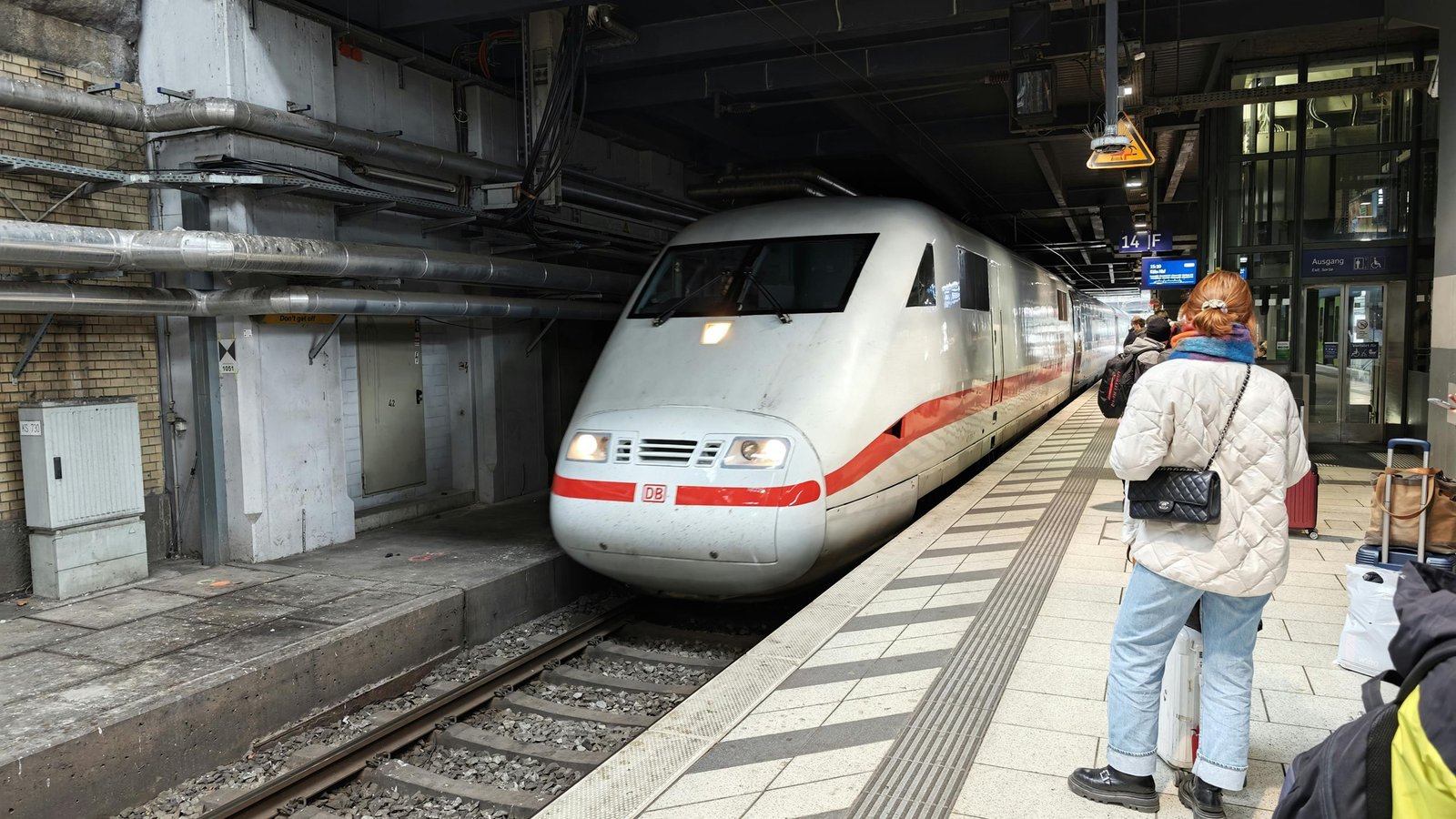
Train travel in Europe is one of the most rewarding ways to move between cities without turning the whole trip into a chain of airports, security lines, and baggage fees. The best European train trips feel practical and romantic at the same time: you leave from the center of one city, watch the landscape change through the window, and arrive close to the next neighborhood you actually want to explore.
It is also one of the easiest ways to make a trip lower-impact. A train-first itinerary can replace short flights, reduce airport transfers, and encourage slower travel with longer stays in fewer places. That said, Europe by train is not automatically simple. Rail passes, seat reservations, operator websites, luggage rules, sleeper cabins, and cross-border booking windows can make planning feel messy if you start in the wrong place.
This guide is built as a practical planning system for Eco Nomad readers. Use it to decide whether a rail pass makes sense, when to buy point-to-point tickets, which routes are beginner-friendly, how to use night trains, and where Eco Nomad's deeper rail guides fit into your trip.
Quick answer: the best way to plan train travel in Europe
The best way to plan train travel in Europe is to build the route before buying tickets. Choose your anchor cities first, group the transfers by train type, then compare a rail pass against individual tickets. Book constrained trains early, especially high-speed international routes, night trains, summer resort routes, and holiday travel days. Keep regional trains flexible when possible.
For many travelers, the winning system is simple: use point-to-point tickets for fixed short trips, use a rail pass for flexible multi-country trips, and reserve the trains that require reservations before you build the rest of the day around them.
If your trip includes several countries, start with Eco Nomad's guide to the best rail passes for Europe. If your trip is mainly two or three city hops, individual tickets may be cheaper and easier.
Who is train travel in Europe best for?
Train travel is strongest for travelers who care about the whole route, not just the destination. It works especially well if you want central arrivals, flexible luggage, scenic travel days, fewer airport transfers, and a slower rhythm. It is also a good fit for digital nomads who want to keep working during the trip, because many European trains give you more usable time than a short flight day.
It may be less ideal if you are trying to cover very long distances on a short timeline, visiting islands with limited rail access, or chasing the absolute cheapest fare without considering transfers. Sometimes flying is still the practical choice. The point is not to make every route a train route. The point is to use rail where it improves the trip.
Europe train planning workflow
- Choose the anchor cities. Pick the places you do not want to miss before filling in scenic detours.
- Check rail vs flying door to door. Compare city-center time, airport transfers, security time, baggage rules, and total effort.
- Group routes by train type. Separate regional trains, high-speed trains, night trains, and cross-border routes.
- Compare pass vs point-to-point cost. Include seat reservation fees, not just the pass price.
- Book constrained trains first. Night trains, Eurostar, popular high-speed routes, and summer coastal routes can sell out.
- Leave room for slow-travel days. Build in at least one lighter day after long transfers.
- Save offline backups. Keep PDFs, reservation codes, platform details, and hotel addresses available without mobile data.
A simple planning workflow for choosing routes, passes, reservations, and backup details before traveling Europe by train.
Rail pass or point-to-point tickets?
A rail pass can be great when you value flexibility, plan several long-distance travel days, or want to adjust the route while moving. Point-to-point tickets are often better when your itinerary is fixed, your route is mostly domestic, or you can book early enough to capture advance fares.
Trip type
Usually better option
Why
2-3 fixed city transfers
Point-to-point tickets
Advance fares can be cheaper when dates and times are locked.
5+ long travel days across countries
Rail pass
Flexibility can be worth more than chasing separate fares.
Mostly regional trains
Compare both
Some regional trips are inexpensive individually and may not need reservations.
High-speed-heavy itinerary
Compare carefully
Passes may still require paid seat reservations on premium trains.
Night train itinerary
Pass plus reservations or direct tickets
Night trains usually require sleeper, couchette, or seat reservations.
Use this as a first-pass decision chart, then price your exact route before buying.
Eurail notes that reservations are not included with the pass and that some high-speed, international, and night trains charge extra reservation fees. That is why a pass comparison should always include both the pass and required reservations.
A simple pass vs ticket cost example
Before buying a pass, make a quick spreadsheet with one row per travel day. Add the likely point-to-point fare, whether a seat reservation is required, and how flexible that day needs to be. Then compare the total against the pass price plus reservations.
Route day
Planning question
Why it matters
London to Paris
Is this a fixed date?
Eurostar-style routes often reward early booking and may require reservations.
Paris to Amsterdam
Do you need a direct train?
Direct trains save effort, but advance fares can vary.
Amsterdam to Cologne
Is flexibility valuable?
A pass may be useful if you might change the travel day.
Cologne to Berlin
Is a domestic advance fare cheaper?
Domestic tickets can sometimes beat the per-day value of a pass.
Do not compare pass price to ticket price alone. Compare pass price plus required reservations to the real cost of the route.
A rail pass becomes more attractive when several travel days are uncertain, when long-distance tickets are expensive, or when you want to decide the next stop mid-trip. Individual tickets become more attractive when you know the exact trains and can book early.
Best routes for first-time Europe train travelers
If this is your first rail-focused Europe trip, choose a route with strong direct connections. You will spend less time untangling booking systems and more time enjoying the journey.
London, Paris, Amsterdam, and Brussels
This is one of the easiest international rail regions for first-timers. Eurostar connects London and Paris in about 2 hours 16 minutes, and the stations are central enough that rail can compete well with flying once airport transfer time is included. Eco Nomad already has route-specific help for London to Paris train planning and Brussels to Paris tickets.
France, Switzerland, and northern Italy
This route works well for travelers who want a mix of fast connections and scenic mountain sections. Consider pairing Paris, Lyon, Geneva, Zurich, Milan, and Florence depending on your pace. It is a good route for travelers who want train days to feel like part of the experience, not just transportation.
Germany, Austria, Czechia, and Hungary
This is a strong slow-travel corridor because the cities are well connected and the journey distances are manageable. Berlin, Prague, Vienna, Salzburg, and Budapest can make a satisfying two-week route. It is also a good region for travelers who want culture, cafes, train stations, and walkable neighborhoods without too many flights.
Spain by high-speed rail
Spain works well when the trip is mostly domestic. High-speed rail can connect major cities efficiently, but book ahead for better fares and check luggage rules by operator. Madrid, Barcelona, Seville, Cordoba, Valencia, and Granada can be combined into a strong rail itinerary if you keep the pace reasonable.
Booking windows and reservation pressure
Not every European train needs to be booked months ahead, but some trains are much easier when handled early. The more a train is international, high-speed, overnight, scenic, or connected to a major event, the more attention it deserves.
Train type
How early to check
Planning note
Night trains
As soon as dates open
Sleeper cabins and couchettes can sell out first.
Eurostar and similar international high-speed trains
Early, especially holidays
Prices and seat choice can change quickly.
Domestic high-speed trains
Several weeks ahead
Advance fares may be lower, but rules vary by operator.
Regional trains
Closer to travel day
Often flexible and sometimes no reservation is needed.
Scenic tourist trains
Early in peak season
Popular departures can have limited seats.
Use this as a planning guide, then verify the exact route with the operator or booking platform.
Where night trains fit
Night trains are useful when they replace both a travel day and a hotel night. They are not always cheaper, but they can make an itinerary feel smoother by turning a long transfer into sleep time.
Use Eco Nomad's guide to the best night trains in Europe and the separate sleeper trains in Europe guide when planning overnight routes. Pay close attention to the difference between a seat, couchette, sleeper cabin, and private compartment. The lowest price is not always the best value if you arrive exhausted.
Night trains work best when the arrival time is useful. A 6:00 a.m. arrival can be rough if your room is not ready and cafes are closed. A later arrival may feel much better, especially if you can store bags and start the day slowly.
Apps and booking tools
No single app covers every European rail situation perfectly. Cross-border booking can still be fragmented, so it helps to use more than one tool when comparing prices and routes.
- Rail pass planning: use the official pass app or booking tools for pass-valid routes and reservations.
- Operator websites: use national rail operators when you know the country and route.
- Aggregator apps: use them for route discovery and cross-border comparisons, then compare with the operator when possible.
- Offline backups: save PDFs, reservation numbers, and station names before travel days.
For a focused tool list, use Eco Nomad's Europe train app guide.
Helpful video for train travel in Europe: The Man in Seat 61
For a deeper planning overview, this Rick Steves Travel Talks video with rail expert Mark Smith from The Man in Seat 61 is a useful companion to this guide. It covers rail passes, schedules, online booking, night trains, and the kind of practical route thinking that helps travelers avoid common first-trip mistakes.
Station logistics that make train days easier
Train stations are usually easier than airports, but they can still be stressful when you are tired, carrying luggage, or reading unfamiliar platform boards. The best train travelers build small buffers into the day.
- Arrive early for unfamiliar international stations. Some routes have security or border checks.
- Know the local station name. Large cities may have several major stations.
- Check the final destination of the train. Platform boards may show the train's last stop, not your stop.
- Keep snacks and water handy. Not every train has reliable food service.
- Use luggage you can lift. You may need to handle stairs, racks, narrow aisles, and quick transfers.
Eco planning tips for train travel in Europe
Rail is only one piece of lower-impact travel. The bigger win is designing a trip that reduces unnecessary hops and gives each stop enough time to matter.
- Stay longer in fewer places. A slower route usually means fewer transfers, less stress, and more money kept local.
- Use direct trains when possible. Fewer connections mean fewer missed-train risks.
- Pack lighter. Lighter luggage is easier on station stairs and makes train changes less chaotic.
- Choose walkable bases. A central hotel or apartment can reduce taxis and short rides.
- Avoid one-night stacking. Too many one-night stops turns rail travel into logistics instead of travel.
The European Environment Agency has repeatedly identified rail as one of the lower-emission passenger transport options compared with many car and air journeys, especially where trains replace short flights. The practical takeaway is simple: the more your itinerary uses direct rail links and longer stays, the more the travel style supports the eco purpose of the trip.
Sample 10-day train travel in Europe itinerary
Day
Base
Train idea
Planning note
1-2
London
Arrive and recover
Keep the first day light if crossing time zones.
3-4
Paris
London to Paris
Book Eurostar early for better choice.
5-6
Amsterdam
Paris to Amsterdam
Compare direct high-speed options.
7
Cologne or Brussels
Shorter connecting stop
Useful if you want to break up the route.
8-10
Berlin
Continue east by day train
Build in a buffer before the return flight.
A beginner-friendly rail route should reduce friction first, then add scenic detours.
Sample 14-day slow-travel itinerary
If you want a slower trip, resist the urge to add more countries just because the map makes it look possible. A calmer two-week route might be Paris, Lyon, Geneva, Zurich, and Milan, or Berlin, Prague, Vienna, Salzburg, and Munich. Both give you variety without making every second morning a checkout morning.
Trip style
Best structure
Why it works
First-time highlights
3-4 major cities
Less route complexity and easier booking.
Slow travel
4-5 bases over 14 days
Enough movement to feel varied, enough time to settle in.
Scenic rail
2-3 bases plus day trips
Lets the journey be the attraction without constant hotel changes.
Digital nomad route
Longer stays in rail hubs
More reliable work rhythm and fewer lost transfer days.
Common mistakes to avoid
- Buying a pass before mapping the route. A pass is a tool, not the starting point.
- Ignoring seat reservations. Some of the fastest and most popular trains require them.
- Booking tight connections. Give yourself more time at unfamiliar stations.
- Assuming every station is central. Most major stations are central, but not every airport rail station or suburban stop is convenient.
- Overpacking. Trains are easier than flights in many ways, but you still carry your own bags.
- Changing cities too often. Rail makes movement easier, which can tempt you into an exhausting itinerary.
- Forgetting local holidays. Holiday weekends can affect prices, seat availability, and station crowds.
What to pack for Europe train travel
The best packing list for train travel in Europe is not about bringing more. It is about bringing luggage that is easy to move through stations and onto trains.
- A carry-on size bag or compact backpack. Choose something you can lift into an overhead rack if needed.
- Compression packing cubes. These help keep small hotel rooms and quick transfers manageable. Eco Nomad has a separate guide to the best compression packing cubes.
- Portable charger. Long travel days can drain phones quickly, especially when using maps and tickets.
- Reusable water bottle. Many European stations and cities have refill options, though availability varies.
- Light cable pouch. Keep chargers, adapters, and earbuds reachable without unpacking the whole bag.
Internal rail planning library
Use this page as the hub, then move into the more specific Eco Nomad rail guides as your itinerary gets clearer.
- Best rail passes for Europe
- European train pass tips
- Best Europe train apps
- Best night trains in Europe
- Best sleeper trains in Europe
- Best European train trips from London
- London to Paris train planning
How to choose hotels for a rail-first trip
Hotel choice matters more on a train itinerary than many travelers expect. A cheap room far from the station can erase the convenience of arriving by rail, especially when you have luggage or an early departure. A slightly more central stay can reduce taxis, make arrival days easier, and keep the trip aligned with the lower-impact purpose of taking trains in the first place.
For rail-first travel, prioritize neighborhoods that are walkable, connected by transit, and close enough to the station that you do not need a long transfer after every travel day. This does not mean sleeping directly beside the tracks. It means choosing a base that lets you arrive, drop bags, and start exploring without adding another complicated leg.
Hotel factor
Why it matters for train trips
Good rule of thumb
Distance from main station
Reduces transfer stress on arrival and departure days.
Look for a direct walk, tram, or metro ride.
Check-in flexibility
Train arrivals do not always match hotel check-in times.
Prioritize luggage storage or early check-in options.
Neighborhood walkability
Less need for taxis or short car rides.
Choose areas with food, transit, and daily needs nearby.
Laundry access
Supports lighter packing on longer routes.
Useful on trips longer than 10 days.
A rail-friendly hotel is not always the cheapest hotel. It is the hotel that keeps the route simple.
When train travel in Europe is not the best option
A good sustainable travel plan should be honest about tradeoffs. Trains are not always the best choice for every European route. If the rail trip requires multiple awkward transfers, arrives in the middle of the night, or turns a one-hour flight into a full day of movement, compare the total impact on your time, budget, and energy.
Islands, remote rural areas, and very long cross-continent routes may require a ferry, bus, flight, or rental car segment. In those cases, the eco-minded move is to reduce unnecessary hops elsewhere. You might fly into one region, then use trains deeply within that region instead of flying between every city.
The most useful question is not, "Can this be done by train?" It is, "Does the train route make the trip better?" When the answer is yes, rail can be the backbone of the itinerary. When the answer is no, use the cleanest practical option and avoid adding extra movement just for the sake of a perfect-looking map.
Train travel checklist before you book
Use this final checklist before buying a pass or locking in individual tickets.
- Route logic: Each stop should either reduce travel friction, add real value, or create a needed rest point.
- Ticket strategy: Compare rail pass value against point-to-point tickets and required reservations.
- Transfer buffer: Give yourself extra time at large unfamiliar stations and cross-border connections.
- Arrival plan: Know how you will get from the station to your hotel without relying on last-minute decisions.
- Offline access: Save tickets, reservations, hotel addresses, and station names before each travel day.
- Food and water: Do not assume every train or station will have what you need at the exact moment you need it.
- Backup route: For important travel days, know whether there is a later train or alternate connection.
How this guide should connect to future supporting posts
This page should act as the hub for Eco Nomad's Europe rail cluster. Supporting posts can go deeper into narrow questions such as Eurail pass reservations, best luggage for trains, city-by-city station arrival guides, night train cabin choices, and rail-friendly hotel neighborhoods. Each supporting post should link back to this guide, and this guide should link out to the best supporting resource when the reader needs more detail.
That structure helps readers move naturally through the planning process. It also keeps the site from creating overlapping articles that compete for the same keyword. The cornerstone page should target the broad phrase train travel in Europe, while supporting posts should target more specific questions like "Eurail pass vs point-to-point tickets" or "best night trains in Europe."
FAQ
Is train travel in Europe cheaper than flying?
Sometimes, but not always. Trains can be cheaper when booked early, when baggage and airport transfers are included, or when the rail station is central. https://economadtravel.com/train-travel-in-europe/


Comments
Post a Comment