Your Guide to Leave the US for Good
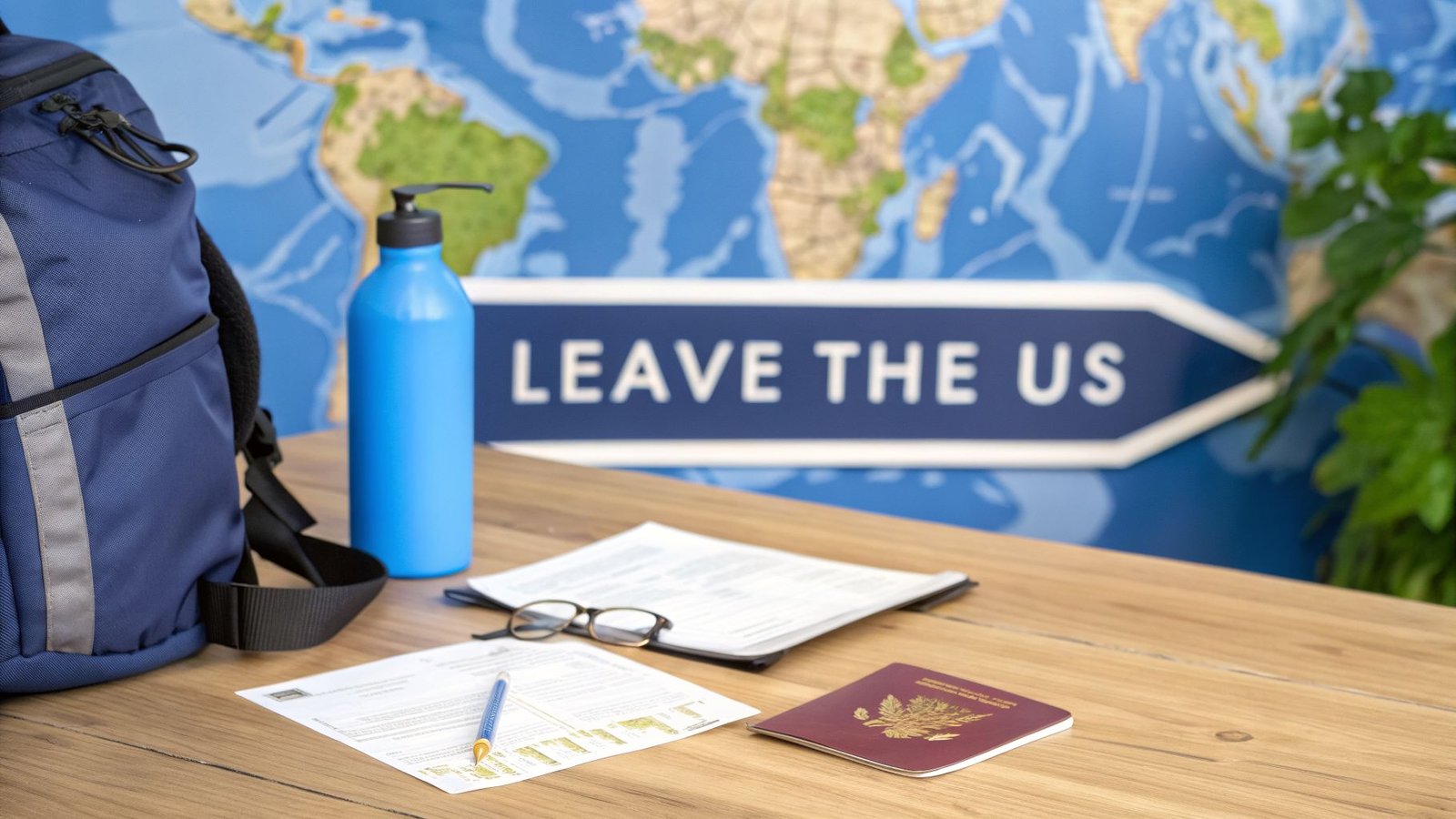
Thinking about how to leave the us for a different way of life abroad? You're not the only one. A growing number of Americans are seriously considering a move. They are drawn by the promise of walkable cities, great public transport, and a chance to dive into new cultures.
This isn't just a vibe shift you're feeling; official data is now showing a massive change. The trend points towards a more global, intentional lifestyle. This guide will walk you through the entire process.
Why More Americans Are Leaving the US
The idea of living abroad has gone from a daydream to a very real plan for many. People are looking for an escape from car-dependent life. They are pulled in by the charm of Europe's historic centers or Asia's high-speed trains. For remote workers who care about their footprint, this move aligns perfectly with a more intentional, lower-impact lifestyle.
Affiliate disclosure: This post may contain affiliate links. If you buy through them, Eco Nomad Travel may earn a small commission at no extra cost to you.
It's about more than a new view from your window. It's about rethinking what quality of life actually means—less time stuck in traffic, more time exploring on foot. That's a win for your well-being and for the planet.
This trend is now clearly reflected in new government data. According to the U.S. Census Bureau, net international migration into the States saw a stunning drop. It fell from a high of 2.7 million people in 2024 to just 1.3 million by mid-2025—a 54% decline.
And projections suggest that number could drop even further. This isn't just a statistical blip. Instead, it points to a real change in how people are moving, influenced by more Americans leaving and shifting policies. You can dig into the full report on this historic migration shift over on the U.S. Census Bureau's blog.
The Pull of a More Sustainable Lifestyle
So what's really driving this move? For many, the decision to leave the US is all about finding a more sustainable and balanced way to live. This often comes down to a few key things:
- Walkable Cities and Public Transit: So many countries, especially in Europe and parts of Asia, are built for people, not just cars. This makes it incredibly easy to live without a vehicle. Consequently, you cut your carbon footprint and daily costs at the same time.
- A Healthier Work-Life Balance: The hustle culture isn't universal. Many expats find a slower pace of life, longer holidays, and a much bigger emphasis on personal time and well-being.
- Affordable and Accessible Healthcare: For Americans, the high cost of healthcare is a huge source of stress. The prospect of simpler, more affordable, and comprehensive healthcare systems abroad is a powerful draw.
- Effortless Travel and Cultural Immersion: Living abroad puts incredible travel opportunities right on your doorstep. Weekends can mean hopping on a train to another country, not just another flight.
As you start looking into it, you'll see that a lot of countries are actively trying to attract skilled remote workers. To get a feel for which places might be a good fit, check out our guide on the best countries for remote workers.
Cost of Living and Financial Breathing Room
The other huge motivator is, of course, the cost of living. In many of the most desirable international spots, your daily costs for housing, groceries, and transport can be way lower than in major US cities.
This isn't just about saving a few dollars. A lower cost of living can give you real financial freedom. It could mean you're able to work fewer hours, save for bigger goals, or finally start that passion project without constant financial pressure. That kind of breathing room is a major reason why life abroad is so appealing for digital nomads and remote workers looking to build a sustainable life.
Your 12-Month Roadmap to Leave the US
The idea of moving abroad often starts as a daydream. But turning that “someday” dream into a real-life departure date is a huge project that can feel overwhelming fast. Thinking about how to actually leave the US means juggling visas, finances, and a mountain of logistics.
A solid 12-month plan helps you tackle it all without the last-minute panic. It breaks the whole process into logical phases. It guides you from early research to finally handing in your keys. This isn't just a checklist; it's a roadmap to keep you on track.
First, you’ll spend a few months just exploring. This is where you get to dream a little, researching countries, figuring out visa paths, and getting real about your savings. Then, you'll shift into action mode—applying for documents, downsizing your life, and getting your finances in order.
The Big Picture: Your 12-Month Checklist for Moving Abroad
This timeline isn't set in stone, but it’s a reliable framework that has worked for countless expats and nomads. Use it to build your own personal plan, moving tasks around as needed. The goal is steady progress, not perfection.
TimeframeKey Tasks12–9 Months Out• Research & shortlist countries.
• Dive deep into visa requirements.
• Create a detailed budget & savings plan.8–6 Months Out• Choose your destination.
• Apply for your visa & renew your passport.
• Find a US expat tax advisor.
• Start decluttering & selling large items.5–3 Months Out• Book your one-way travel.
• Secure short-term housing for your arrival.
• Open an international-friendly bank account.2–1 Months Out• Set up a virtual mailbox service.
• Get quotes for travel insurance.
• Digitize important documents.
• Start packing essentials.Final Weeks• Notify banks of your move.
• Sell your car & cancel subscriptions.
• Set up your eSIM for arrival.
• Have that farewell party!
Let’s dig into what each of those phases actually feels like.
12–9 Months Out: Research and Financial Prep
This is your discovery phase. Start by brainstorming countries that match your lifestyle. Are you looking for a buzzing city hub, or a quiet town where you can hike every day? Once you have a shortlist, it’s time to get serious about visa research. Go straight to the source: official embassy and consulate websites are the only places to get accurate, up-to-date information.
At the same time, you need a financial reality check. Build a detailed budget and a savings plan with a clear end goal. A good target is to have at least six months of living expenses for your new country saved up. Depending on your destination and comfort level, this can be anywhere from $10,000 to $20,000 USD.
If you're wondering whether you're alone in this, you're not. The trend of people looking for opportunities outside the US is growing.

This shift shows that making a global move is becoming a more common path for Americans. Consequently, resources and communities are easier to find than ever.
8–6 Months Out: Making It Official
Now your plans start to feel real. With your destination locked in, it's time to submit your visa application and renew your passport if it has less than a year of validity left. These bureaucratic processes can take months, so starting early is non-negotiable.
This is also the moment to find a tax professional who specializes in US expat issues. They can walk you through your obligations. For instance, they can explain concepts like the Foreign Earned Income Exclusion (FEIE), which can save you a lot of headaches and money down the road.
On the home front, it’s time to start downsizing. Go through everything you own and sort it into keep, sell, or donate piles. Not only does this simplify your move, but selling furniture, electronics, and other items can give your moving fund a nice last-minute boost.
The Final Six Months Before You Leave the US
The home stretch is all about logistics. Around five to three months out, you should book your flight or, even better, your train and ferry tickets. As an eco-conscious traveler, this is your chance to find lower-carbon routes. This is also when you should start looking for your first rental and open an international-friendly bank account.
In the last couple of months, you’ll be tying up loose ends.
- Set up mail forwarding with a virtual mailbox service.
- Notify your banks and credit card companies of your move.
- Get a solid travel insurance plan in place.
- Pre-book a reliable airport transfer. A service like Welcome Pickups is great for avoiding taxi hassles after a long flight.
The final weeks are for packing, selling your car, and saying your goodbyes. One of the most important last steps is to lock in your eSIM. A provider like Airalo lets you download a data plan before you leave. This means you have internet the second you land.
This is the stage where having the right systems in place makes all the difference. Our guide to the best travel planning tools can help you organize all these final details. It makes that final step feel less like a leap of faith and more like a confident stride into your new life.
Getting Your Visas, Taxes, and Banking Sorted
Let’s talk about the paperwork. Tackling the admin side of leaving the U.S. is where your dream trip becomes a reality. This isn’t the most glamorous part of the process. However, getting your visa, understanding your tax situation, and setting up your international banking are the three pillars that will hold up your new life abroad.
First, the visa. This is your legal ticket to live somewhere else. The rules vary wildly from one country to the next. You might be eyeing Portugal’s Digital Nomad Visa, which focuses on proving remote income. Or perhaps a long-stay visa for a country like France, where they might care more about your savings.
Don't guess. The only source of truth for visa rules is the official embassy or consulate website for the country you're interested in. Blogs and forums are great for stories, but they’re terrible for legal requirements that change all the time.
This whole process can take anywhere from three to six months, and sometimes even longer. You absolutely have to start early. Most applications will ask for a valid passport, proof you can support yourself (income or savings), a background check, and proof of health insurance. Our guide on digital nomad visas is a good place to get a feel for the landscape of what's out there.

Navigating US Expat Taxes
Here’s a fact that trips up a lot of new American expats: as a U.S. citizen, your duty to file federal taxes follows you no matter where you live in the world. This is true even if you’re already paying taxes in your new home country. It sounds complicated, but it's manageable once you know the rules.
The good news is the IRS has systems in place to prevent you from being taxed twice on the same income. The two most common tools are:
- The Foreign Earned Income Exclusion (FEIE): This lets you exclude a huge chunk of your foreign-earned income from U.S. taxes. The exact number changes each year, but for the 2023 tax year, it was over $120,000 USD. To use it, you have to meet either the Physical Presence Test or the Bona Fide Residence Test.
- The Foreign Tax Credit (FTC): This is a dollar-for-dollar credit against your U.S. tax bill for any income taxes you’ve already paid to a foreign government.
Hiring a tax professional who specializes in expat issues is one of the smartest investments you can make. They'll help you figure out whether the FEIE or FTC is better for you and make sure you’re filing correctly. As you map out your move, getting specialized advice is key. There are excellent online resources that go deep into financial planning for expats, which will help you build a solid financial strategy.
Best tools for this trip: Banking and Money
Okay, so how will you actually get paid, move money between currencies, and pay for things abroad? This is a huge piece of the puzzle. If you just stick with your U.S. bank account, you’re setting yourself up for a world of high foreign transaction fees and awful exchange rates.
The financial tools for global workers have gotten so much better. This is partly because more people are on the move. Having the right banking setup is more critical than ever. Here’s how your main options stack up.
Comparison: Banking Options for Expats
Banking OptionBest ForProsConsUS Bank (No Fees)Short-term stays or as a backup.Easy to manage; no new accounts needed.Poor exchange rates; can be hard to receive local payments.Local Bank AbroadLong-term stays; paying local bills.Essential for rent, utilities, and local payroll.Can be a hassle to open as a non-resident.Fintech (Wise)Everyone. The bridge between countries.Excellent exchange rates; holds multiple currencies.Not a traditional bank; some services may be limited.
For almost everyone leaving the U.S., a hybrid approach is the way to go. Keep a U.S.-based account that has no foreign transaction fees for any American income or bills. As soon as you land and get settled, open a local bank account for daily life.
And most importantly, use a fintech service like Wise to act as the bridge between them. It’s an absolute game-changer for moving money between countries cheaply and quickly.
Best Tools for Your Move Abroad
A well-laid plan to leave the US runs on more than just a timeline and a visa. It's the small, practical tools you set up before you go that make the difference between a stressful arrival and a smooth landing. From staying connected the second you touch down to getting around without getting scammed, a few key services are non-negotiable.
Nothing derails a first day in a new country faster than not having internet. This is where an eSIM becomes your best friend. It lets you get online the moment the plane lands without having to hunt down a physical SIM card.
Choosing Your Connectivity and Travel Options
For anyone moving between countries, an eSIM is a game-changer. It lets you buy and activate a data plan right from your phone. You can compare prices and plans for your destination before you even pack your bags. If you need immediate internet upon arrival, getting an eSIM is the best solution. Lock your eSIM with a service like Airalo.
A service like Airalo is perfect if you’re hopping between countries and need flexible, regional data packages. But if you're a digital nomad who needs an unlimited data plan or a virtual phone number to keep your life running, a provider like Yesim offers more robust plans built for remote work.
eSIM Provider Comparison for Global Nomads
Choosing an eSIM service really comes down to your travel style. Are you making short trips across multiple countries or settling in for a longer stay? This quick comparison should help you decide.
ProviderBest ForCoveragePrice PointAiraloRegional and country-specific plans with easy top-ups.200+ countries and regions.$$YesimUnlimited data plans in specific regions and a virtual number.120+ countries.$$$Local SIMLong-term stays in a single country for the best local rates.Country-specific.$
Ultimately, a local SIM card is almost always the cheapest for long stays in one spot. However, an eSIM gets you connected instantly upon arrival, which is worth its weight in gold.
When booking your main journey, think beyond the flight. Eco-conscious nomads can use platforms like Trip.com to find lower-emission alternatives. For those traveling within Europe or Asia, it’s worth checking their train and bus route options to shrink your carbon footprint.
Arriving Safely and Insured
Landing in a new city after 12 hours of travel can be disorienting. Pre-booking an airport transfer is a smart move for a safe, stress-free start to your new life. A service like Welcome Pickups gives you a reliable, fixed-rate ride with a professional driver. This way, you can sidestep the usual taxi scams.
Finally, do not leave home without proper travel insurance. Your standard two-week vacation policy won't cut it for a long-term move abroad. You need a real plan that covers medical emergencies, trip interruptions, and potential evacuations. For long-term travelers and expats, a plan from VisitorsCoverage provides the peace of mind you need to handle whatever the world throws at you.
By setting yourself up with these services, you're not just planning a move. Instead, you're building a practical support system for your new global life. While you're at it, check out our full guide on the best eco-friendly gear for digital nomads to round out your packing list.
How to Pack and Downsize Sustainably
Deciding to leave the US is often about embracing a lighter way of living. This isn't just about packing a bag. Rather, it's about turning the overwhelming task of sorting through your life into an empowering first step toward freedom.
The philosophy is simple. Go through everything you own and sort it into four piles: 'keep,' 'sell,' 'donate,' and 'digitize.' You have to be a bit ruthless here, but also intentional. The goal isn't just to get rid of stuff—it's to give your belongings a second life and keep them out of a landfill. Platforms like Facebook Marketplace or OfferUp are great for selling items and making sure they go to someone who actually needs them.
For the things you absolutely can’t part with, you’ve got a big decision: international shipping or long-term storage? It's worth really weighing the pros and cons. Shipping is expensive and carries a heavy carbon footprint, while storage fees can quickly become a costly anchor to your old life. Before you commit, think about the true cost—financial, environmental, and emotional.

Building Your Zero-Waste Packing List
Once you've downsized, it's time to build a packing list that matches your low-impact goals.
https://economadtravel.com/leave-the-us/

Comments
Post a Comment