How To Pack Carry On Only For Any Trip A Complete Guide
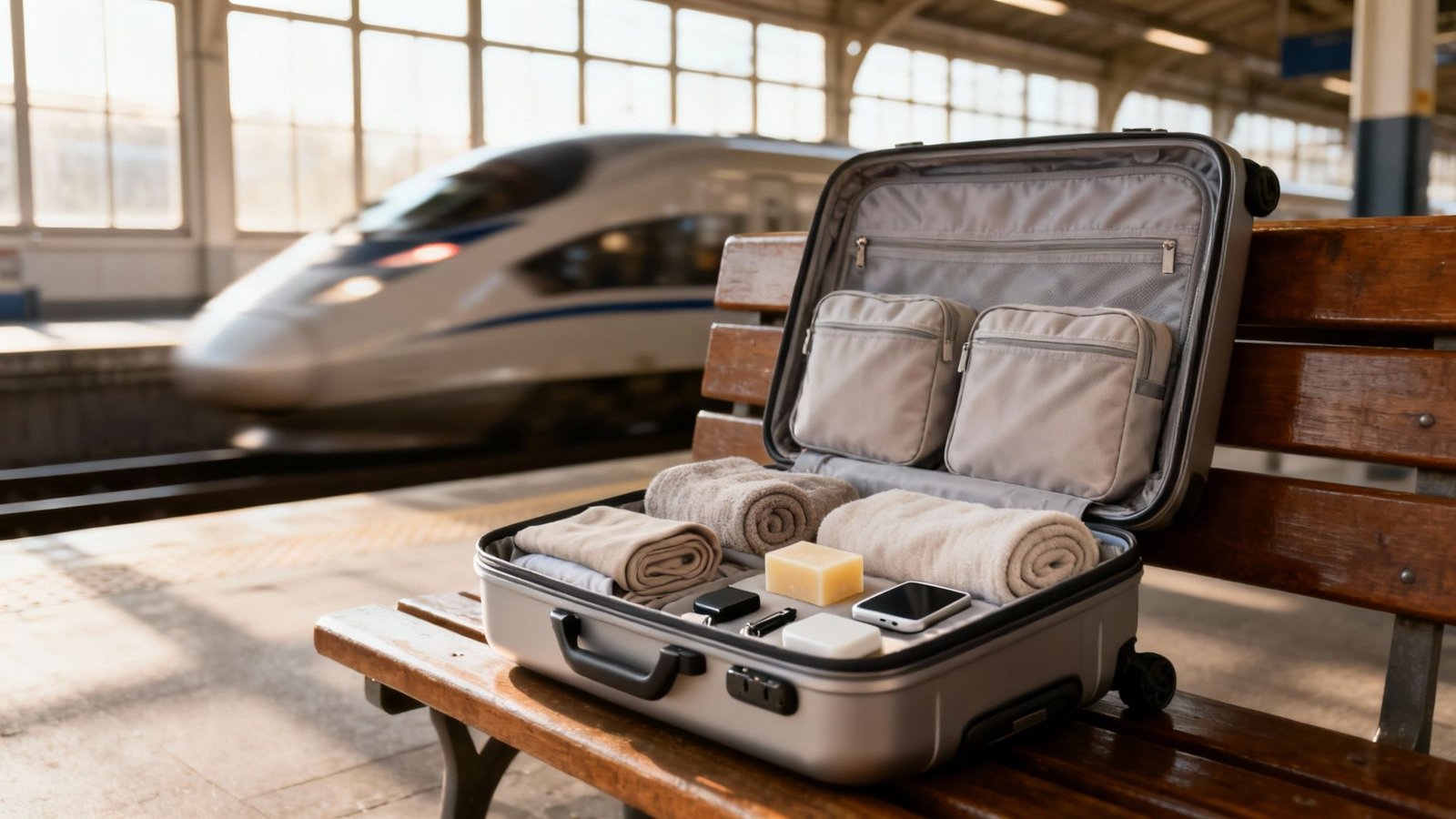
Learning how to pack carry on only is less about a magic formula and more about a mindset shift. It’s about choosing versatile clothes, swapping liquids for solids, and using a simple system like packing cubes to fit a whole trip into one bag. Once you master it, you’re free from checked bag fees and the anxiety of lost luggage—a change that completely transforms how you move through the world.
The Freedom of Traveling With Just One Bag
Picture yourself gliding through a packed European train station or navigating the cobblestone alleys of an old city, completely unburdened. Going carry-on-only isn’t just a packing hack; it’s a deliberate move toward more freedom, flexibility, and conscious travel. For an eco-nomad who prefers seamless, low-impact adventures, it's practically essential.
These days, it feels less like a choice and more like a necessity. The travel landscape has changed, and lost luggage is a far more common nightmare than it used to be. According to the International Air Transport Association (IATA), 52% of global passengers now travel with only a carry-on. This isn't surprising when you see that mishandled baggage rates recently jumped by a staggering 74.7%. For digital nomads who depend on their gear, that’s a risk you just can’t take. You can see more of these trends over on Eminent.com.
Affiliate disclosure: This post may contain affiliate links. If you buy through them, Eco Nomad Travel may earn a small commission at no extra cost to you.
This article was fact-checked using sustainability data from the World Green Building Council, the Global Ecotourism Network, and peer-reviewed architecture studies. All partner links are vetted for compliance with sustainable business certifications.
Financial and Environmental Benefits
Beyond dodging the lost luggage carousel, the savings are real. U.S. airlines pocketed $6.8 billion in baggage fees in just one recent year, and that number keeps climbing. When you commit to one bag, you sidestep those costs entirely, freeing up your budget for better things. It also opens the door to cheaper, seat-only fares and helps you avoid expensive luggage storage fees when you get to your destination.
From a sustainability angle, packing light makes a direct, positive difference. A lighter load means less fuel burned by planes and other transport, shrinking your carbon footprint. This minimalist mindset slots perfectly into rail-first itineraries and regenerative tourism, where being mobile and low-impact is the whole point.
It encourages you to:
- Move easily between trains, buses, and walkable city centers.
- Reduce your reliance on taxis or ride-shares just to haul heavy bags.
- Support local economies by purchasing things you need when you arrive.
Ultimately, learning how to pack carry-on-only is about reclaiming control over your journey. It swaps chaos for calm, excess for efficiency, and worry for a genuine sense of liberation.
Building Your Sustainable Capsule Wardrobe
The secret to packing carry-on only isn't about cramming more stuff into a small bag. It's about building a smart, versatile wardrobe where every single piece works with everything else. This isn't about restriction; it's about freedom. When every top matches every bottom, a tiny collection of clothes can create dozens of different outfits.
The foundation of this whole system is fabric. Materials like merino wool and Tencel are an eco-conscious traveler's best friend—they’re naturally wrinkle-resistant, quick-drying, and fight off odors. That means you can wear them more and wash them less, looking sharp whether you're in a Lisbon co-working space or hiking a trail in the Alps.
This approach saves you from the classic overpacking trap. And the struggle is real: a travel survey from Radical Storage found that nearly 72% of us confess to bringing too much, with 40% admitting they lug home clothes they never even wore. A little thoughtful wardrobe planning eliminates that stress entirely.
Start With a Neutral Color Base
The core of any good travel capsule is a neutral color palette. I'm talking black, navy, grey, beige, or olive green for your main items—things like pants, jackets, and your most-worn tops. These shades are timeless, they go with anything, and they make the perfect canvas.
When you start with neutrals, you guarantee every top works with every bottom. It’s a simple strategy that multiplies your outfit options without adding a single extra thing to your pack. This is packing efficiency at its best.
Add Personality With Accent Colors
Once you've got that solid neutral base, it's time to bring in some personality. Pick one or two accent colors you absolutely love, something that pops against your neutral tones. Think rust, mustard yellow, or a deep teal.
You can weave these colors in through a few key pieces:
- A vibrant scarf that can also work as a wrap on a chilly evening.
- A couple of t-shirts or a versatile dress.
- A statement piece of jewelry or a colorful hat.
This way, you get visually interesting and diverse looks without the bulk. A simple black tee and dark jeans can feel completely different with a colorful accessory, easily taking you from a day of exploring to dinner out.
Focus on High-Performance, Sustainable Fabrics
For any eco-conscious traveler, fabric choice is about more than just convenience—it’s about impact. Investing in pieces made from sustainable, high-performance materials is where it all comes together.
- Merino Wool: This natural fiber is a game-changer. It regulates your body temperature, wicks away moisture, and is naturally antimicrobial, meaning it resists odors for days. One good merino wool t-shirt can honestly replace three cotton ones.
- Tencel (Lyocell): Made from sustainably sourced wood pulp, Tencel is incredibly soft, breathable, and drapes beautifully. It’s also very wrinkle-resistant, so it looks great right out of a packed bag.
- Recycled Fabrics: Lots of brands now offer high-quality clothing made from recycled polyester or nylon. These materials are durable, dry incredibly fast, and help keep waste out of landfills. You can dive deeper into picking the right materials in our guide to the best fast-drying travel clothes.
By choosing fabrics that require less washing, you not only pack lighter but also conserve water and energy on the road. It’s a small change that contributes to a more sustainable travel habit.
A Real-World Capsule Wardrobe Example
Let's put this into practice. Imagine you're off on a two-week trip that mixes city workdays with weekend nature escapes. Here’s what your wardrobe could look like:
Tops (4):
- 2 Merino wool t-shirts (one black, one grey)
- 1 Long-sleeve Tencel shirt (neutral)
- 1 Button-down shirt in an accent color
Bottoms (2):
- 1 Pair of versatile, dark-wash travel pants or jeans
- 1 Pair of comfortable, multi-purpose trousers or leggings
Layers (2):
- 1 Lightweight merino wool sweater (neutral)
- 1 Packable, water-resistant jacket (neutral)
Shoes (2):
- 1 Pair of comfortable, stylish sneakers for walking
- 1 Pair of versatile flats or loafers
With just these 10 items, you can create outfits for almost any situation you'll encounter. That button-down can be worn on its own, open over a t-shirt, or tied at the waist for a different look. The sweater layers up for warmth or works just fine on its own. This system proves that having more to wear isn't about packing more items—it’s about packing smarter ones.
Your Packing System: The Gear And Techniques That Work
Having the right gear is only half the story. The real secret to how to pack carry-on only is mastering a few smart techniques to use every inch of your bag's space. This is where your travel strategy comes to life.
Proven methods can seriously shrink your belongings, keep you organized, and even make your bag feel lighter on your back. It’s time to get hands-on with the systems that turn packing from a chore into a simple, repeatable process.
A solid system boils down to three things: compression, organization, and weight distribution. Nail these, and you’ll fit more into your bag while keeping everything balanced and easy to find. Forget sitting on your suitcase to zip it shut; these techniques create space you didn't know you had.
Rolling Versus Folding
The age-old debate for packers is whether to roll or fold. For carry-on travel, I'm firmly in the rolling camp. Tightly rolled clothes take up way less volume than folded ones and are less likely to get deep-set wrinkles. This works brilliantly for t-shirts, pants, dresses—pretty much all the basics.
For bulkier items like sweaters or jackets, I use a modified technique called the "Ranger Roll." This military-style roll involves folding the garment's edges inward and then rolling it tightly into a compact, self-contained bundle. It's a game-changer for saving space and stops the item from unrolling inside your pack.
The Power Of Packing Cubes
Packing cubes are the secret weapon of organized one-bag travelers. I never leave without them. These zippered fabric containers let you compartmentalize your gear, grouping similar items together. You might have one cube for tops, another for bottoms, and a smaller one for socks and underwear.
This system is a lifesaver for a few reasons:
- Organization: You know exactly where everything is. No more tearing your entire bag apart to find one t-shirt.
- Compression: Many packing cubes are designed to squeeze out excess air, shrinking the overall bulk of your clothes.
- Efficiency: Unpacking is as simple as pulling out a few cubes and dropping them in a drawer. You're settled in minutes.
For a deeper dive into creating an efficient packing system, explore our complete guide on how to pack for low-impact travel.
How To Pack Your Carry-On For Comfort And Balance
The way you load your bag directly affects how comfortable it feels. The golden rule is simple: keep the heaviest items close to your back and centered in the pack. This improves your center of gravity and stops the bag from pulling you backward.
I always place dense items—my tech pouch, shoes, or toiletry kit—at the bottom of my bag, right up against my spine. Lighter, bulkier things like clothes can then fill the remaining space. This tiny adjustment makes a huge difference when you're navigating long train station corridors or cobblestone streets.
Editor’s Pick: The Best Carry-On For Eco-Nomads
Cotopaxi Allpa 35L Travel Pack
The Cotopaxi Allpa 35L is a top choice for sustainable travelers and digital nomads. Its clamshell design opens like a suitcase, giving you easy access to everything without digging. It's built from durable, repurposed nylon and polyester, aligning perfectly with a low-impact travel ethos. The internal mesh compartments work like built-in packing cubes, and the stowable harness system makes it versatile for both airport runs and train travel.
This visual guide breaks down the simple, three-step process for building a versatile capsule wardrobe—the core of any good one-bag system.
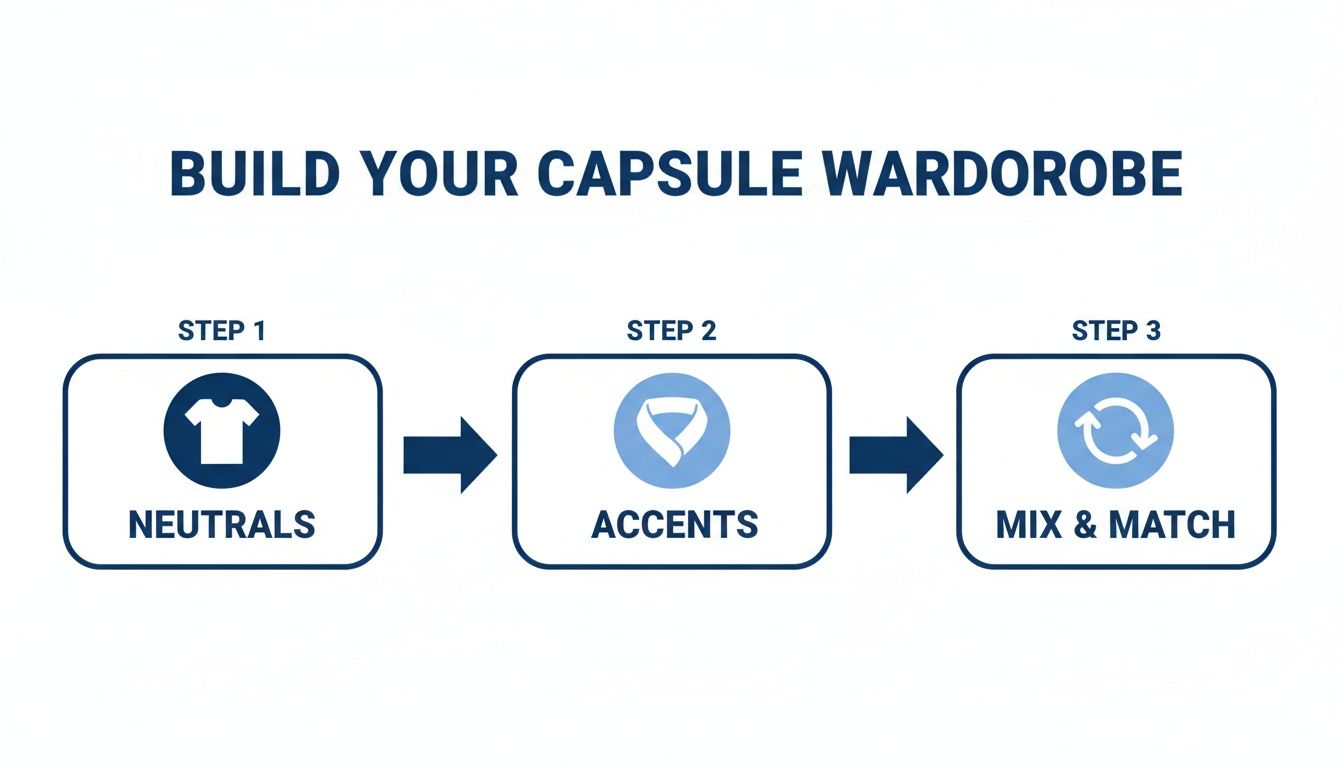
By starting with a neutral base and adding a few accent pieces, you can easily create dozens of mix-and-match outfits from a tiny number of items.
Downsizing Your Toiletries And Tech Kit
Your toiletries and tech are often the biggest culprits pushing a bag over the carry-on limit. They're heavy, bulky, and an absolute pain if not organized properly. Mastering how to pack carry on only isn't about ditching your essentials; it's about making smarter, multi-functional choices.
The game plan is simple: go solid with your toiletries and minimalist with your tech. By rethinking these two categories, you'll free up a shocking amount of space and weight. The result is a lighter, more organized bag that sails through airport security.
Embrace Solid Toiletry Alternatives
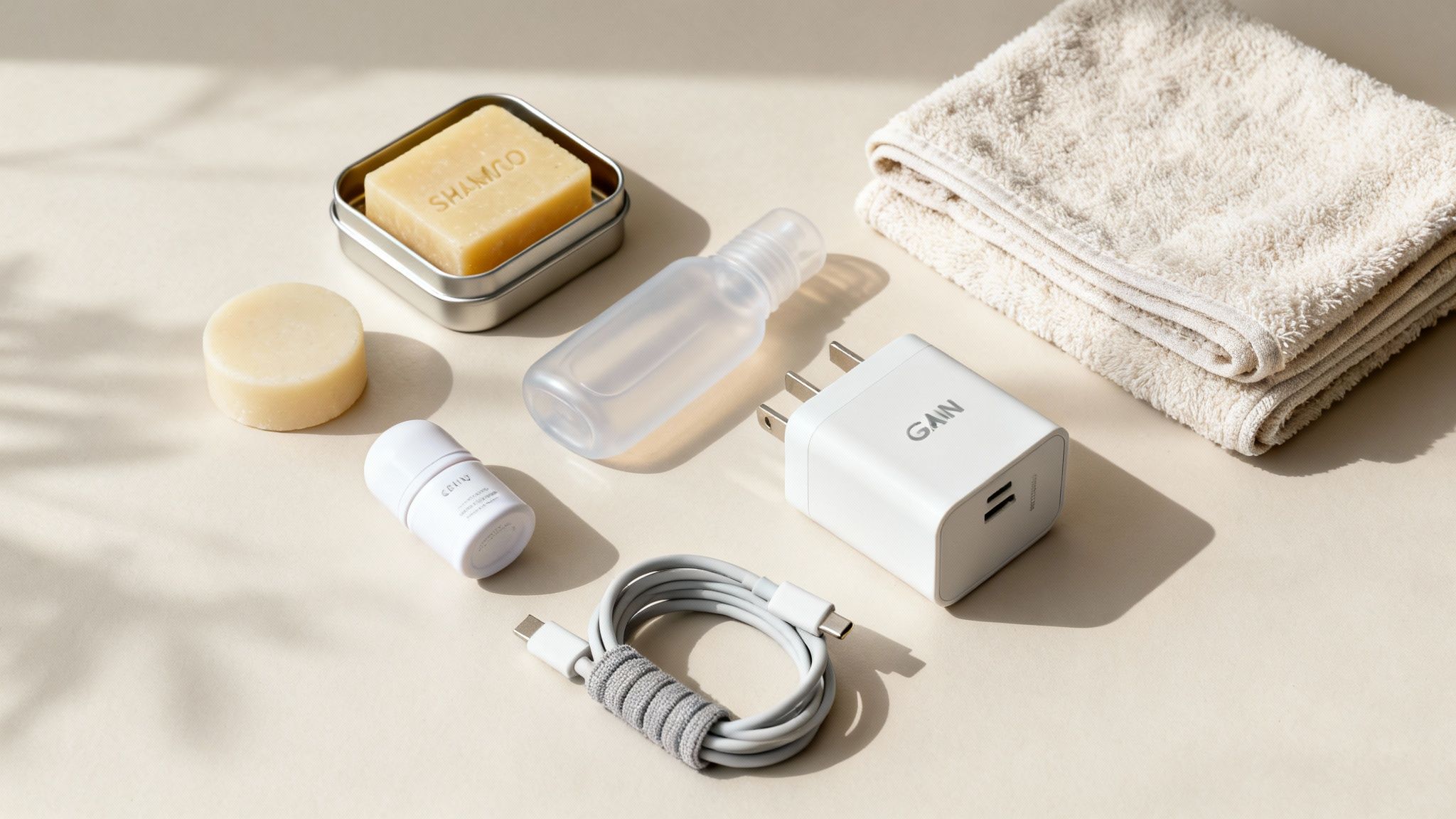
The single best move you can make to shrink your toiletry bag is to eliminate liquids. Solid products are not only TSA-friendly but also prevent those dreaded in-bag spills and slash single-use plastic. It's a massive win for both your packing system and the planet.
Consider making these simple, high-impact swaps:
- Shampoo and Conditioner Bars: One little bar can last for months, easily replacing multiple plastic bottles.
- Solid Perfume or Cologne: These come in small tins, deliver a lasting scent, and you never have to worry about a broken glass bottle.
- Toothpaste Tablets: Lightweight, completely mess-free, and a brilliant alternative to bulky tubes.
- Bar Soap for Body and Shaving: A quality moisturizing bar soap can easily pull double duty, saving you one more item.
For any liquids you absolutely can't live without, grab a set of TSA-compliant reusable containers. Make sure they are under 3.4 ounces or 100 milliliters. This lets you decant just enough for your trip instead of lugging around full-sized bottles. A well-organized, leak-proof bag is non-negotiable.
Build An Efficient Mobile Office
For any digital nomad, tech is essential, but a rat's nest of cords and heavy power bricks is a packing nightmare. The goal is a powerful yet streamlined mobile office that runs on the absolute minimum gear. This starts with consolidating your entire charging system.
A single Gallium Nitride (GaN) charger is the cornerstone of a minimalist tech kit. These powerful, compact chargers can simultaneously power your laptop, phone, and other devices from one outlet, eliminating the need for multiple bulky power bricks.
Pair that GaN charger with a high-quality universal travel adapter. This one gadget ensures you can plug in anywhere in the world. To finally defeat cord chaos, use a dedicated cable organizer or tech pouch. This keeps all your chargers, adapters, and memory cards in one spot, preventing that tangled mess at the bottom of your bag.
Finally, ditch physical SIM cards for good. Services like Airalo or Yesim offer eSIMs you download directly to your phone. This gives you instant connectivity the moment you land without adding any physical bulk to your kit. For more ideas on assembling a low-impact setup, check out our complete guide to building an eco-friendly travel kit for 2025.
Staying Light On The Road With Smart Resupply Habits
One of the biggest mental hurdles to long-term, one-bag travel is the fear of running out of things. What happens when your toothpaste is gone, or you’re down to your last clean shirt?
The answer is simple, and honestly, a little liberating: you just buy more stuff and do laundry on the road. This is the core principle you have to embrace to learn how to pack carry on only for more than a quick weekend trip.
It's a huge mindset shift. You stop packing for every possible "what if" scenario and start trusting in your own resourcefulness. Not only does this keep your bag exceptionally light, but it also turns mundane chores into genuine opportunities for local immersion.
The Art Of On-The-Go Laundry
Keeping your clothes fresh doesn’t mean you need to haul a massive wardrobe across continents. It just requires a simple, consistent laundry routine. No matter where you are, you've got a few easy and effective options.
- Hotel Sink Washing: For a few small items like socks, underwear, or a t-shirt, a quick wash in the sink is perfect. I always pack a universal sink plug and a small bar of solid laundry detergent or multi-purpose soap. Pair that with a portable travel clothesline, and your gear will be dry by morning.
- Local Laundromats (Lavanderías): Finding a local laundromat is a fantastic way to reset your entire wardrobe. It can actually become a relaxing part of your weekly routine—a quiet hour to read a book, plan your next move, or just watch the world go by. It’s an authentic local experience you'd otherwise completely miss.
By doing a small load every few days, you can travel indefinitely with just a handful of outfits. This habit is fundamental to making long-term carry-on travel feel sustainable and totally stress-free.
Resupplying Consumables Locally
Instead of trying to cram a three-month supply of your favorite shampoo into your bag, embrace the freedom of buying consumables as you go. The whole strategy is about carrying only what you need for the immediate future—maybe a week or two at most.
When you run low on toiletries, sunscreen, or even snacks, you just pop into a local pharmacy or grocery store. This lightens your initial load significantly and gives you a practical reason to explore neighborhood shops, discover new products, and put your money directly into the community's economy.
This is one of the most effective ways to keep your pack light. More importantly, it builds confidence in your ability to adapt and find what you need, wherever you are in the world. This approach fits perfectly with our guide on developing more sustainable travel habits.
You learn to rely on the destination, not just on what you can carry. It transforms you from a visitor just passing through into a more engaged and resourceful traveler. You stop asking "Do I have enough?" and start realizing "I can always get more when I need it." This is true packing freedom.
Navigating Airline And Train Carry On Rules
After you've carefully curated every item in your bag, the final hurdle in mastering how to pack carry on only is the gauntlet of airline and train luggage rules. Getting this wrong can be a costly mistake.
Every airline has its own spin on size and weight restrictions, and what flies on one carrier might get you a surprise gate-check fee on another. You absolutely have to check before you leave home.
This is especially true with budget airlines in Europe. Carriers like Ryanair and easyJet are famously strict, and their standard carry-on allowance is often much smaller than what major international airlines permit.
https://economadtravel.com/how-to-pack-carry-on-only/

Comments
Post a Comment